





HomeCase StudiesUC Free Speech

Making Free Speech Research and Programs Easier to Explore

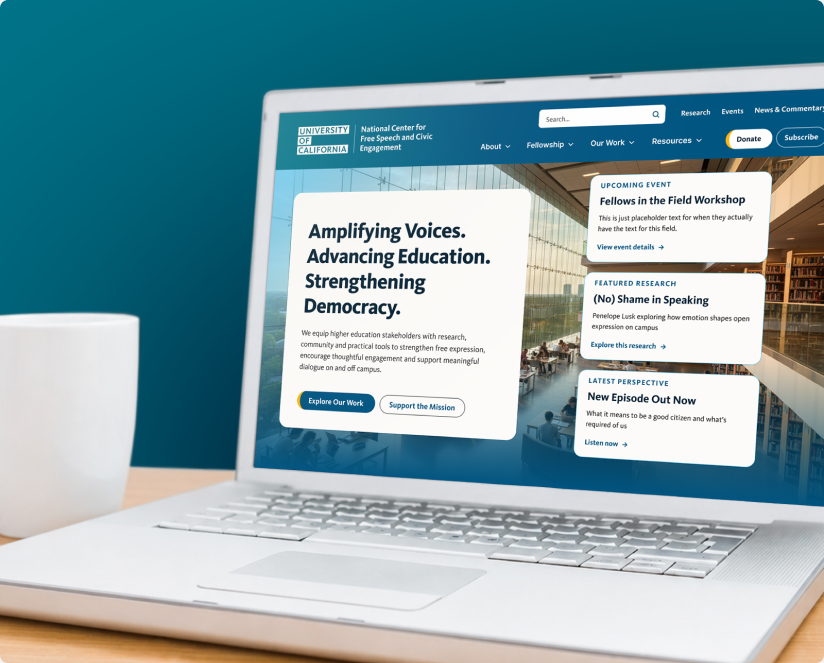
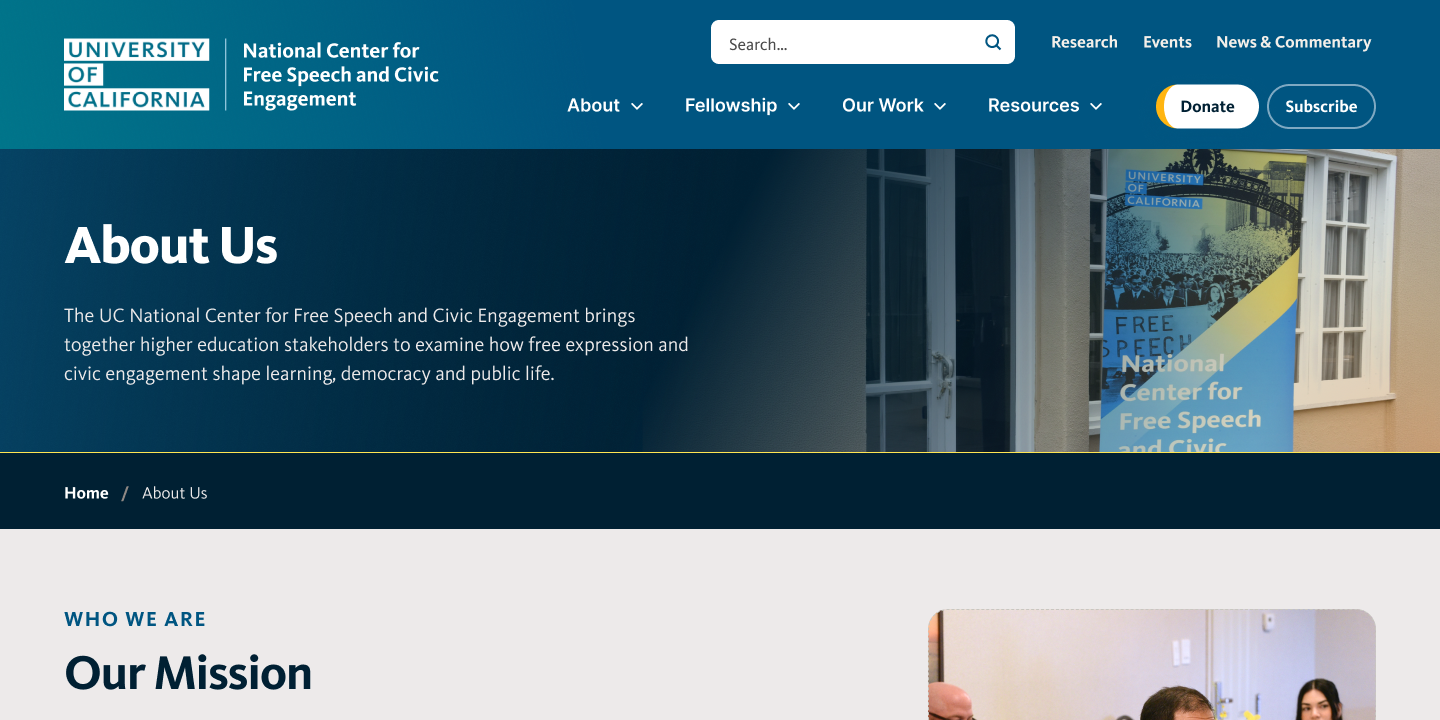
The redesigned website gave the UC National Center for Free Speech and Civic Engagement a clearer, more accessible home for its research, fellows, and programs, built so the Center’s team can keep it current on its own.

73

Fellows research files digitized

Fellow profiles

newly connected to all projects and research

In-house updates

built for staff to add events, fellows, and awardees

Accessible

built to WCAG 2.2 standards

UC Free Speech website design
INDUSTRY
Higher Education
Timeline
June 2026 - October 2026
Focus
Turning Academic Research into an Accessible Public Resource

Highlights

  • The UC National Center for Free Speech and Civic Engagement needed a website that made its research, fellows, events and programs easy to explore for students, faculty, and the public.
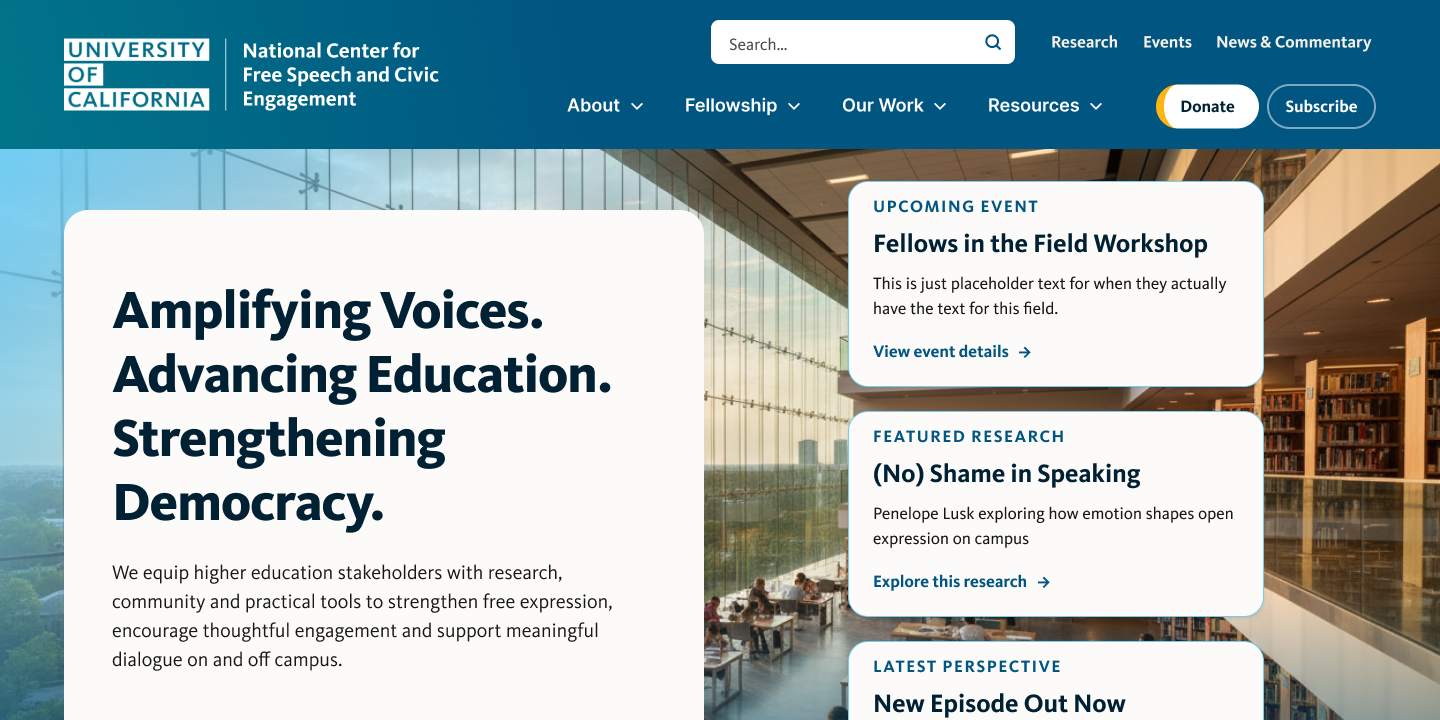
  • WebXd restructured the site around clear audience paths, separating UC community resources from national programs so each audience can find what’s relevant to them.
  • We replaced static, year-by-year VOICE awardee pages with a dynamic, filterable directory built from scratch.
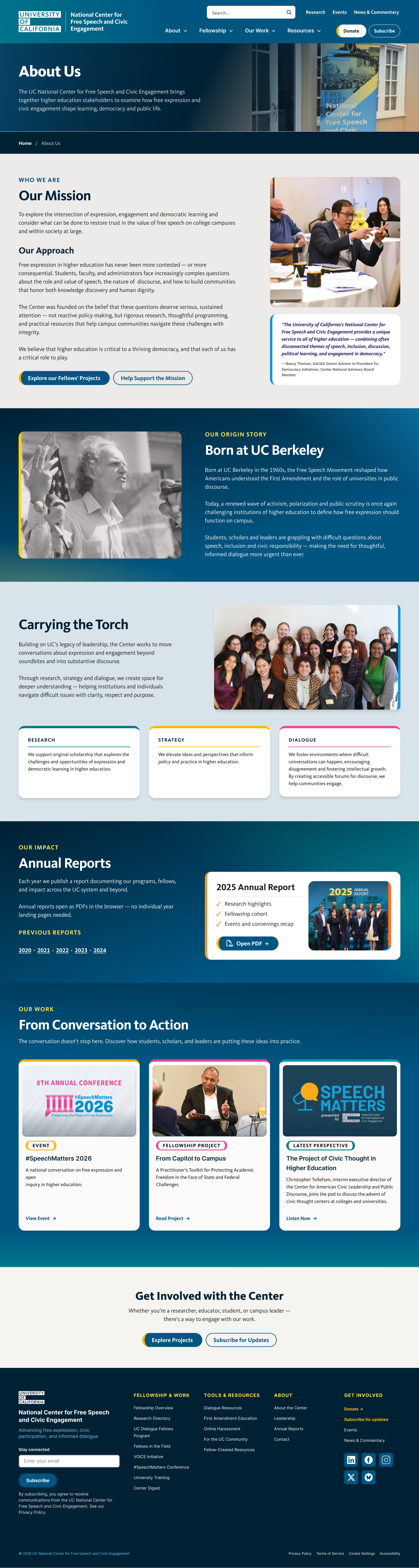
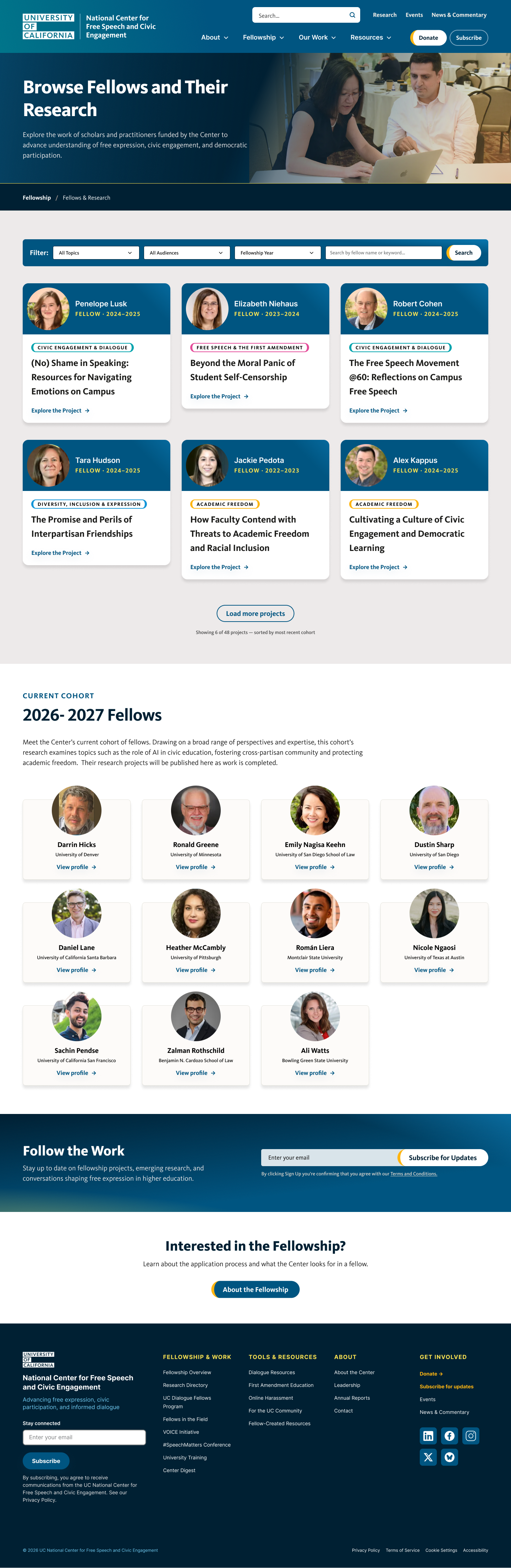
  • We created fellow profiles that connect each fellow to their projects and research, along with dedicated leadership and bio pages.
  • We built the site so the Center’s team can add events, new fellows, and VOICE awardees on their own, keeping it current without relying on a developer.
  • The new WordPress site meets WCAG 2.2 accessibility standards and includes newsletter signup, a donate path, press coverage, and testimonials.
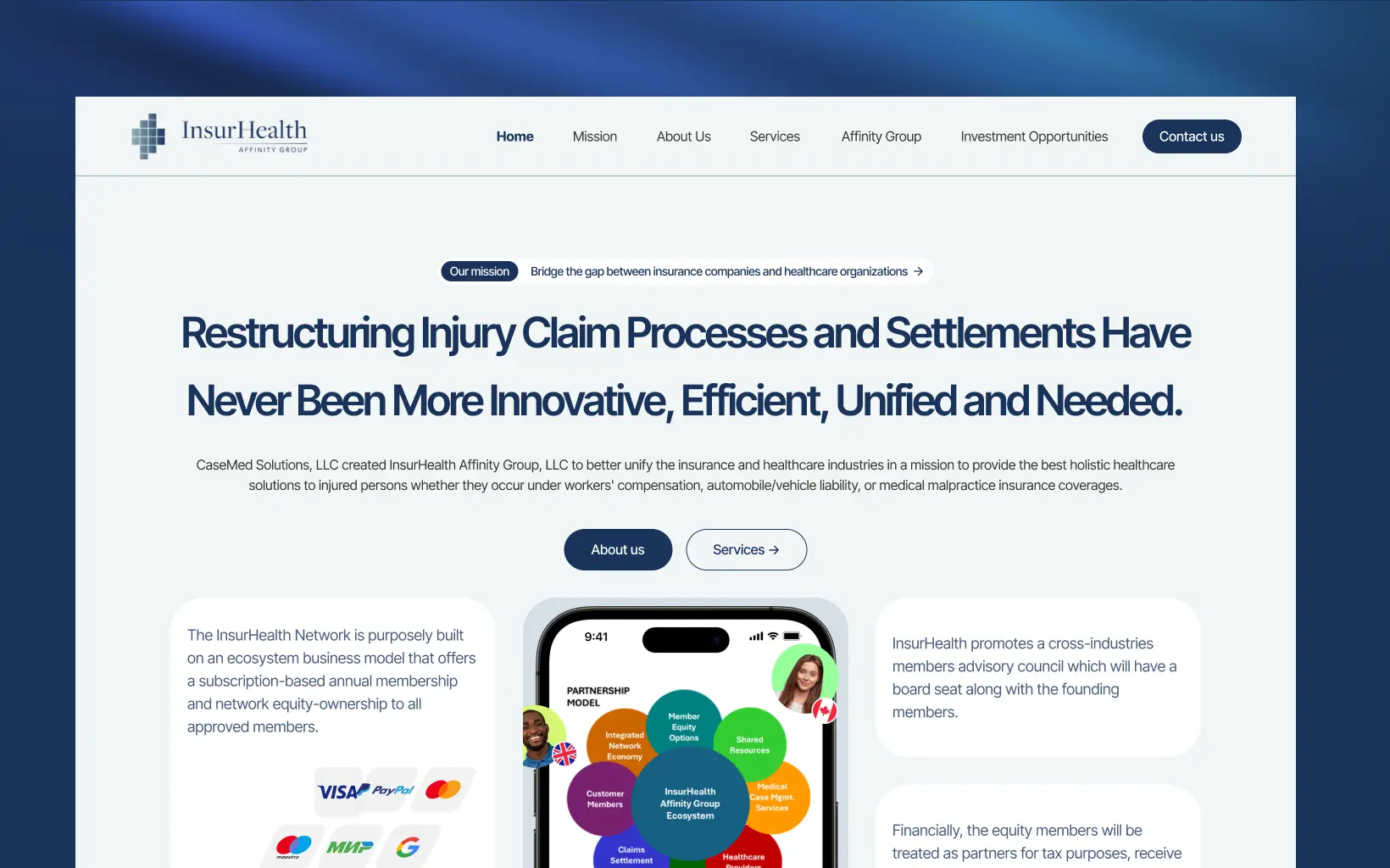
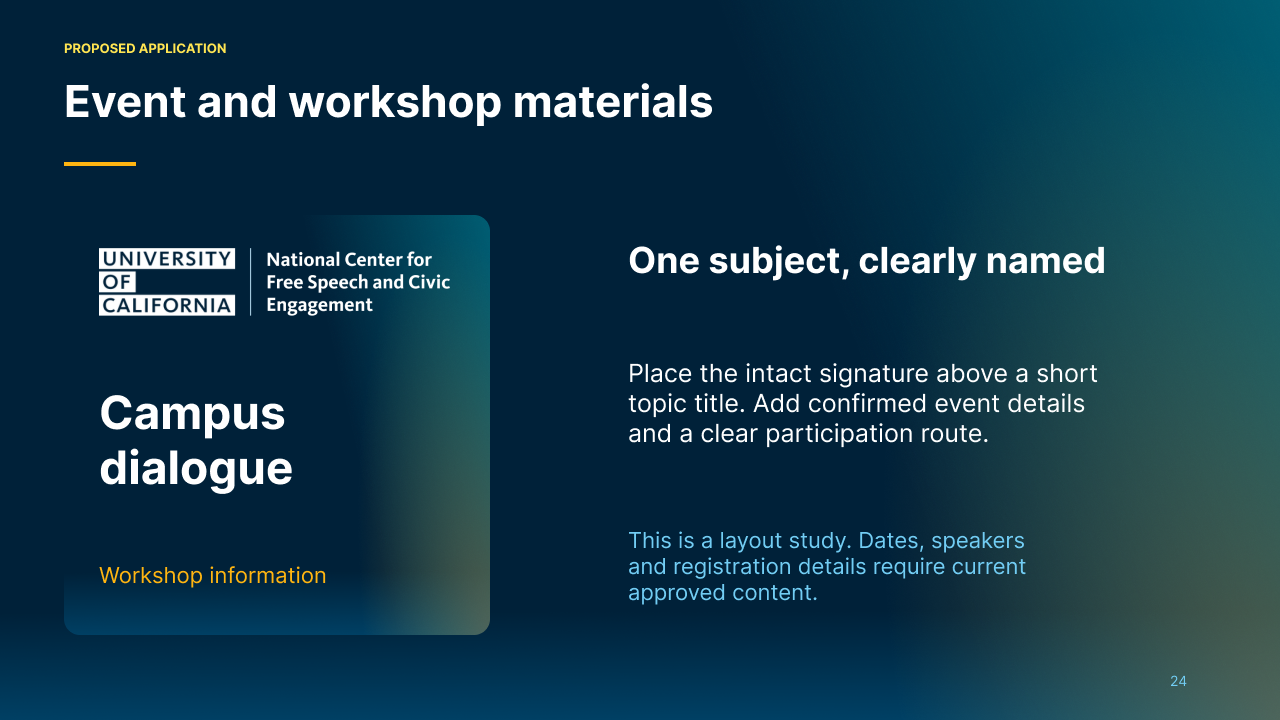
  • UC Free Speech gallery image 1
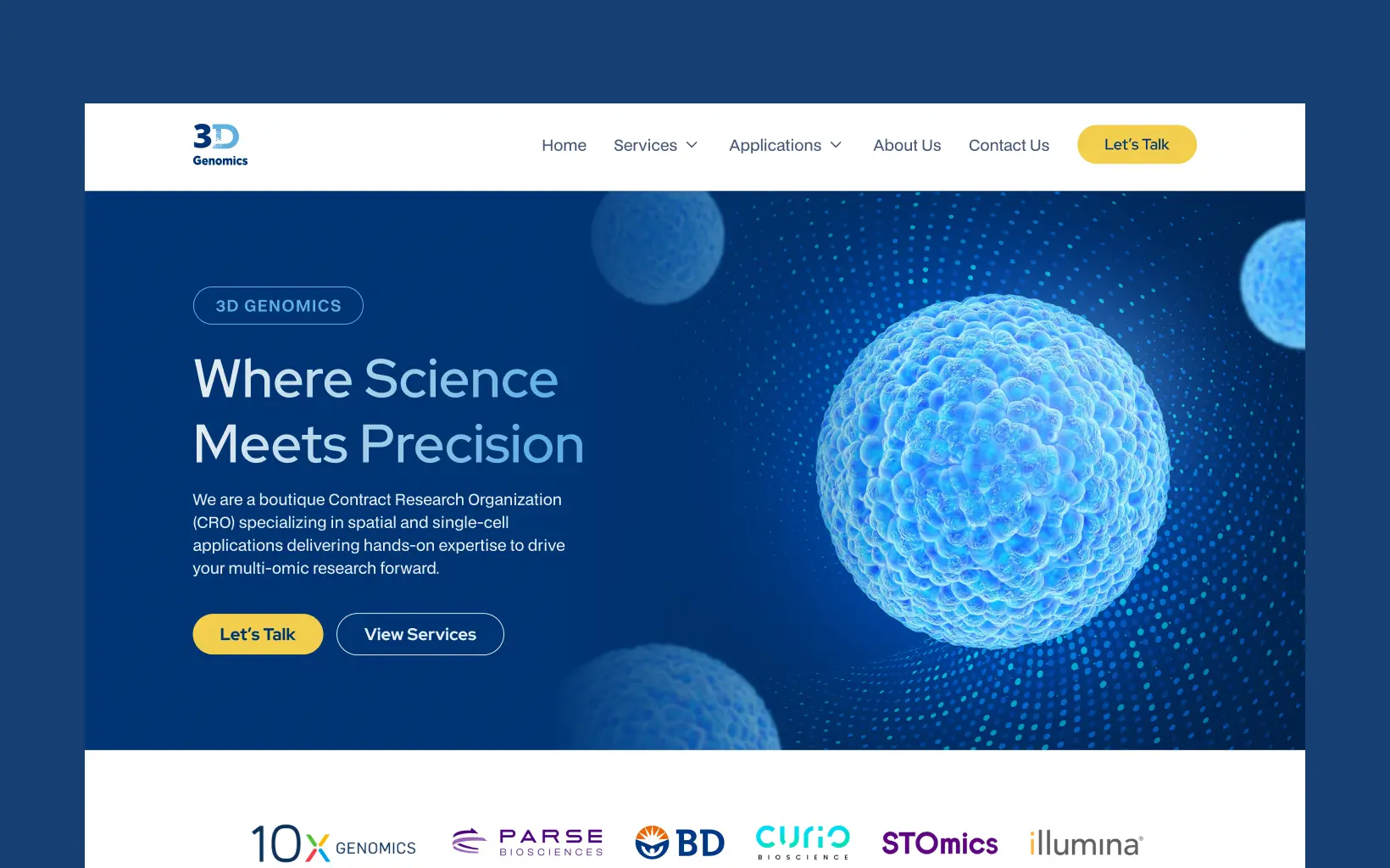
  • UC Free Speech gallery image 4
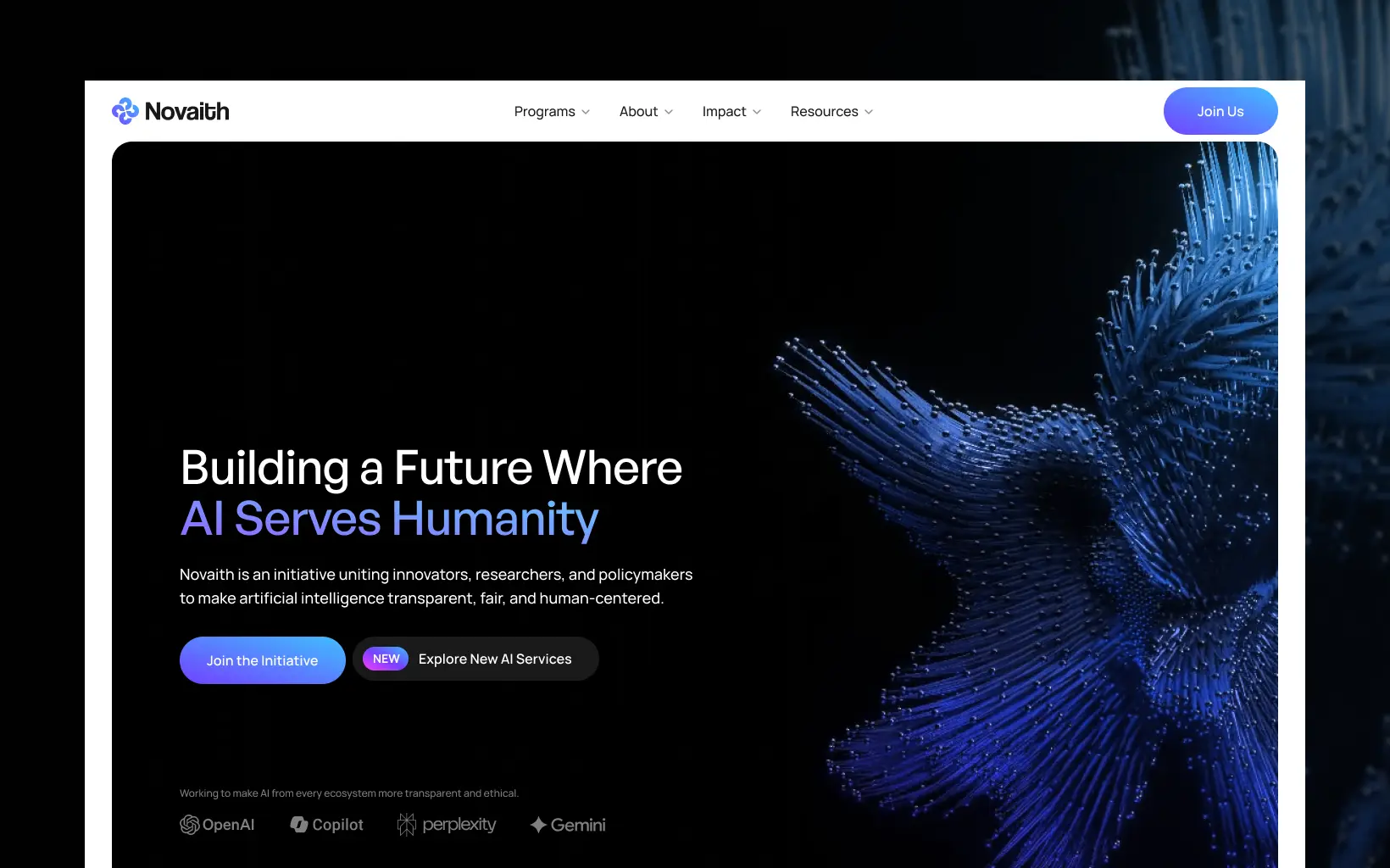
  • UC Free Speech gallery image 7
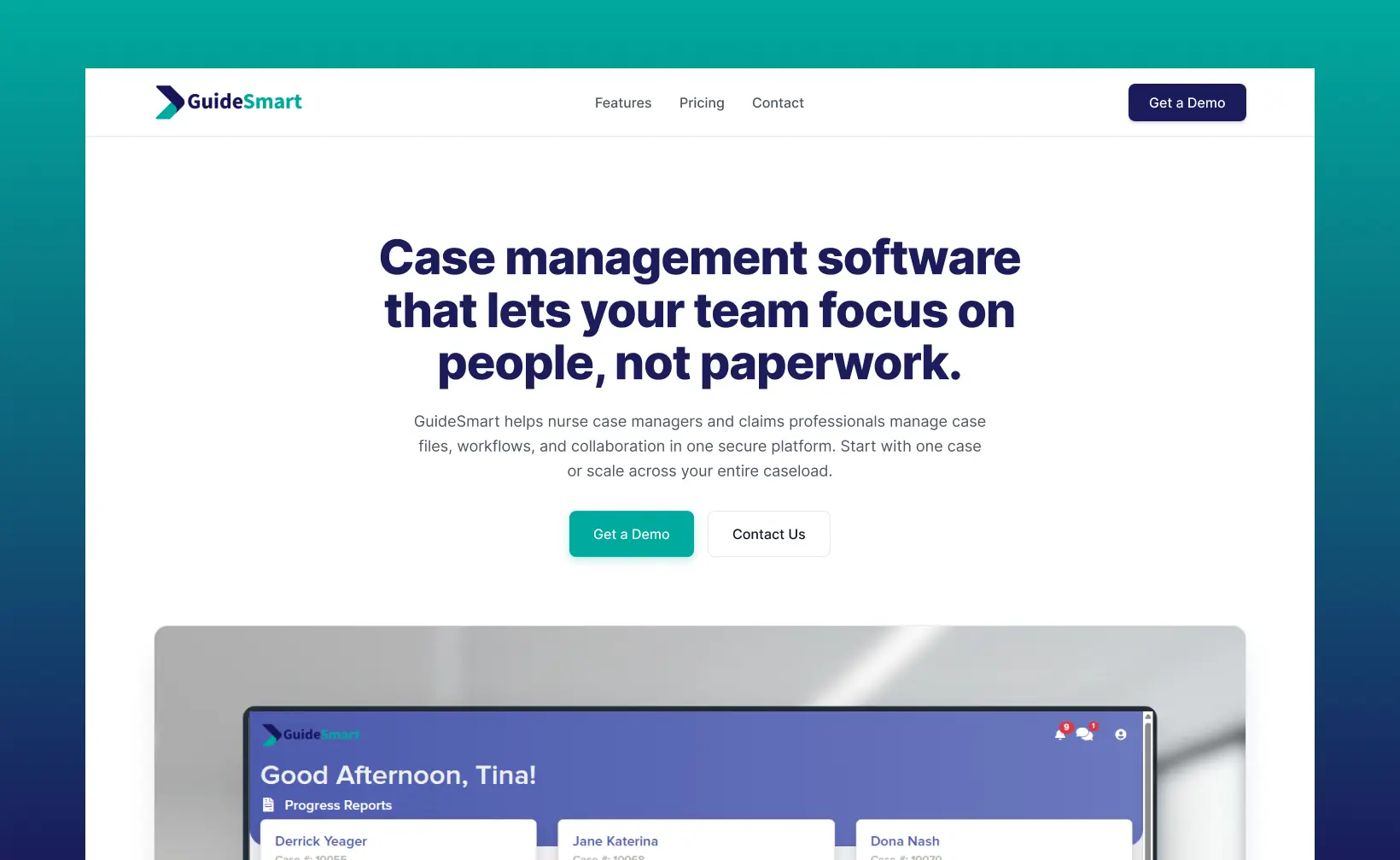
  • UC Free Speech gallery image 10
  • UC Free Speech gallery image 13
  • UC Free Speech gallery image 16
  • UC Free Speech gallery image 19
  • UC Free Speech gallery image 22
  • UC Free Speech gallery image 25
  • UC Free Speech gallery image 2
  • UC Free Speech gallery image 5
  • UC Free Speech gallery image 8
  • UC Free Speech gallery image 11
  • UC Free Speech gallery image 14
  • UC Free Speech gallery image 17
  • UC Free Speech gallery image 20
  • UC Free Speech gallery image 23
  • UC Free Speech gallery image 3
  • UC Free Speech gallery image 6
  • UC Free Speech gallery image 9
  • UC Free Speech gallery image 12
  • UC Free Speech gallery image 15
  • UC Free Speech gallery image 18
  • UC Free Speech gallery image 21
  • UC Free Speech gallery image 24

About the UC National Center for Free Speech and Civic Engagement

The University of California National Center for Free Speech and Civic Engagement equips higher education communities with research, programs, and practical tools to strengthen free expression and support meaningful dialogue on and off campus. Through its fellowship program, the VOICE awards, events, and resources for the UC community and beyond, the Center connects scholars, students, and practitioners working on the hardest questions about speech, democracy, and civic life.

Services Performed

  • UX/UI design
  • Content organization
  • WordPress development
UC Free Speech about media image 1
UC Free Speech about media image 2
UC Free Speech about media image 3
UC Free Speech client work 1

The Challenge

The UC National Center for Free Speech and Civic Engagement had a growing body of research, fellows, programs, and award recipients, but its website made that work hard to find and harder to maintain.

  • Static, year-by-year awardee pages: VOICE award recipients lived on separate pages for each year, so visitors couldn’t search or browse them in one place, and every new cohort meant building another page.
  • Fellows disconnected from their work: There was no consistent way to connect each fellow to their projects and research.
  • Blurred audiences: UC community resources and national programs sat side by side, making it hard for each audience to find what applied to them.
  • Updates that depended on a developer: Adding events, new fellows, or awardees required more technical effort than a small team should need.
  • Scattered programs and events: Research, programs, events, and news weren’t organized into clear paths.
  • Accessibility requirements: As a University of California center, the site needed to meet current accessibility standards.

The Solution

WebXd reorganized and rebuilt the Center’s website on WordPress, with a structure that makes its work easy to explore and easy to keep current.

  • Filterable VOICE awardee directory: We replaced static yearly pages with a dynamic, filterable directory built from scratch, so visitors can browse every awardee in one place.
  • Fellow profiles: We created a profile template that connects each fellow to their projects and research.
  • Clear audience paths: We reorganized the site’s content so UC community resources and national programs each have their own place.
  • Easy in-house updates: We built the site so the Center’s team can add events, new fellows, and VOICE awardees on their own, without relying on a developer.
  • Leadership, press, and testimonials: We added leadership and bio pages, a press coverage section, and a testimonial slider to highlight the Center’s people and impact.
  • Engagement tools: We integrated MailChimp newsletter signup and a clear donate path.
  • WCAG 2.2 accessibility: We built the site to meet WCAG 2.2 standards so every visitor can use it.
UC Free Speech client work 2

The Results

The redesigned website gave the UC National Center for Free Speech and Civic Engagement a clearer, more accessible home for its research, fellows, and programs, built so the Center’s team can keep it current on its own.

Research and programs that are easier to explore

Clear paths through research, fellowships, programs, and events help students, faculty, and the public find the Center’s work without digging through disconnected pages.

Every VOICE awardee in one place

The filterable directory brings every year of VOICE award recipients together, so visitors can browse the full history of the program instead of jumping between yearly pages.

Fellows connected to their work

Fellow profiles link each fellow to their projects and research, giving the Center’s scholars more visibility and making their work easier to discover.

A site the team can keep current

The Center’s staff can now add events, new fellows, and VOICE awardees on their own. Each new cohort and event no longer requires developer time, which keeps the site current and lowers the cost of maintaining it.

Accessible to every visitor

Built to WCAG 2.2 standards, the site supports visitors using assistive technologies and meets the accessibility expectations of a University of California center.

Together, these results give the Center a website that reflects the depth of its work and can grow alongside it.

73

Digitized Fellows research files

Fellow profiles

fellow profiles connected to all projects and research

In-house updates

easy updates, done by staff, for events, fellows, and awardees

Accessible

built to WCAG 2.2 standards

What This Means for Your Institution

University centers and institutes often outgrow websites built page by page. Every new cohort, award, or event adds another page to maintain, and the work that matters most gets buried. A site organized around how people actually explore, with directories and profiles your team can update on its own, keeps your work visible and current without constant developer support. For research centers with small teams and big missions, that combination of clarity and independence makes all the difference.

FAQs

Organize the website around how people actually explore: by topic, program, and person rather than by year or department. Clear paths to research, fellowships, and events, plus directories and profiles that connect people to their work, help students, faculty, and the public find what they need without digging.

Separate pages for each year bury past recipients and add another page to build every cycle. A filterable directory keeps every awardee in one place, makes the full history of the program easy to browse, and lets staff add new recipients in minutes. That’s what we built for the Center’s VOICE awards.

Yes, if the site is built for it. We built the Center’s WordPress site so staff can add events, new fellows, and VOICE awardees on their own. Routine updates no longer wait on developer time, which keeps the site current and lowers ongoing costs.

Most universities now expect websites to meet WCAG 2.2, the current version of the Web Content Accessibility Guidelines. We built the Center’s site to WCAG 2.2 standards so visitors using screen readers, keyboard navigation, and other assistive technologies can use every page.