



HomeCase StudiesUCI TNT

Building a Double-Blind AI Patient Research Platform for UC Irvine School of Medicine

The completed platform gives the UCI TNT research team a configurable system for managing double-blind AI patient studies from setup through data export.

  • Researchers manage studies without routine developer support
  • Cross-sectional and longitudinal study configuration
  • Structured consent, questionnaires and AI patient sessions
  • Research-ready records and interaction transcripts
UCI TNT hero
INDUSTRY
Higher Education
TIMELINE
4 months, June 2025 - September 2025
ENGAGEMENT
Custom web application development for a research study platform

Highlights

  • UCI School of Medicine’s TNT Fellowship Program needed a double-blind research platform where participants could interact with AI patient bots and complete structured questionnaires.
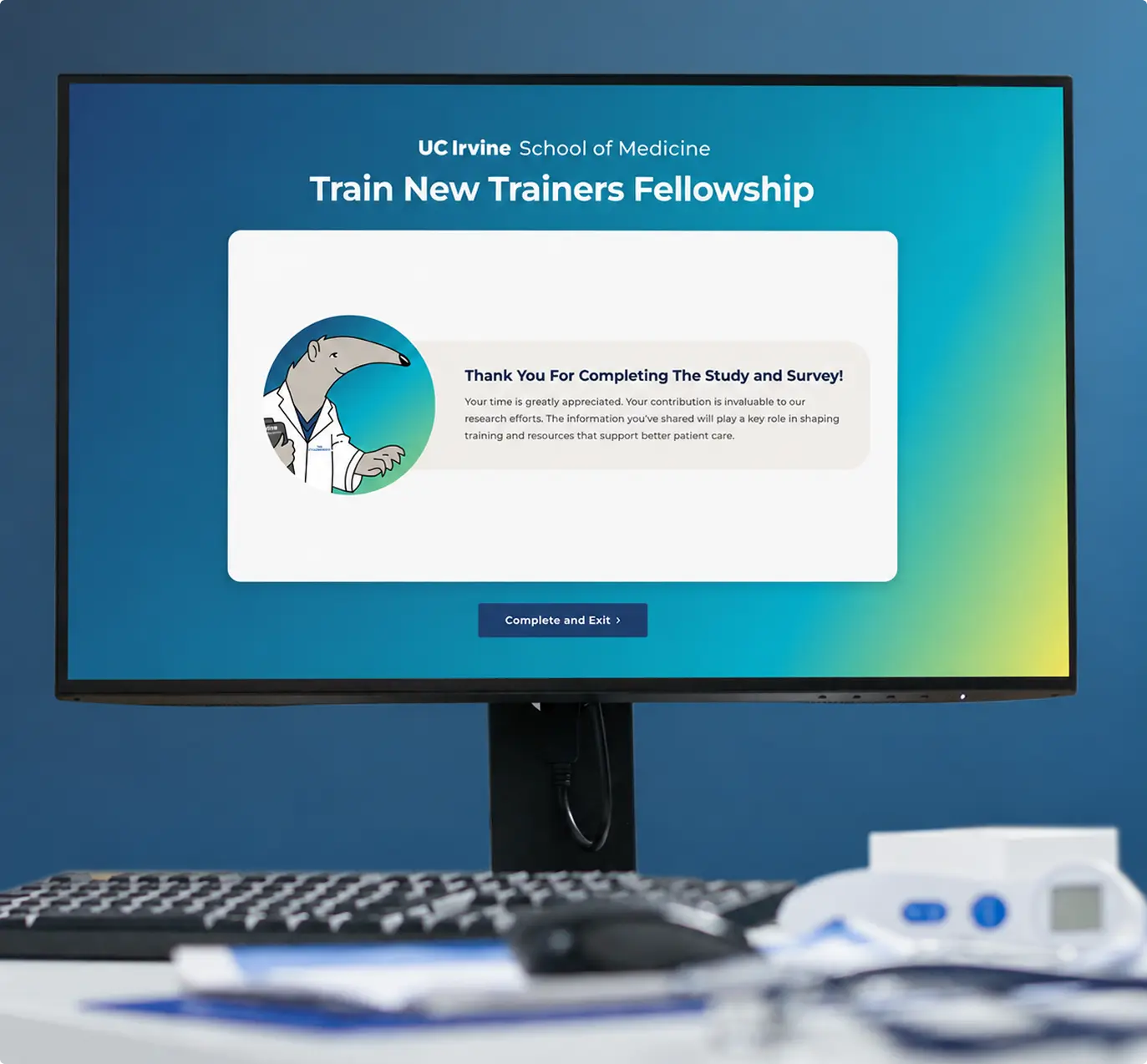
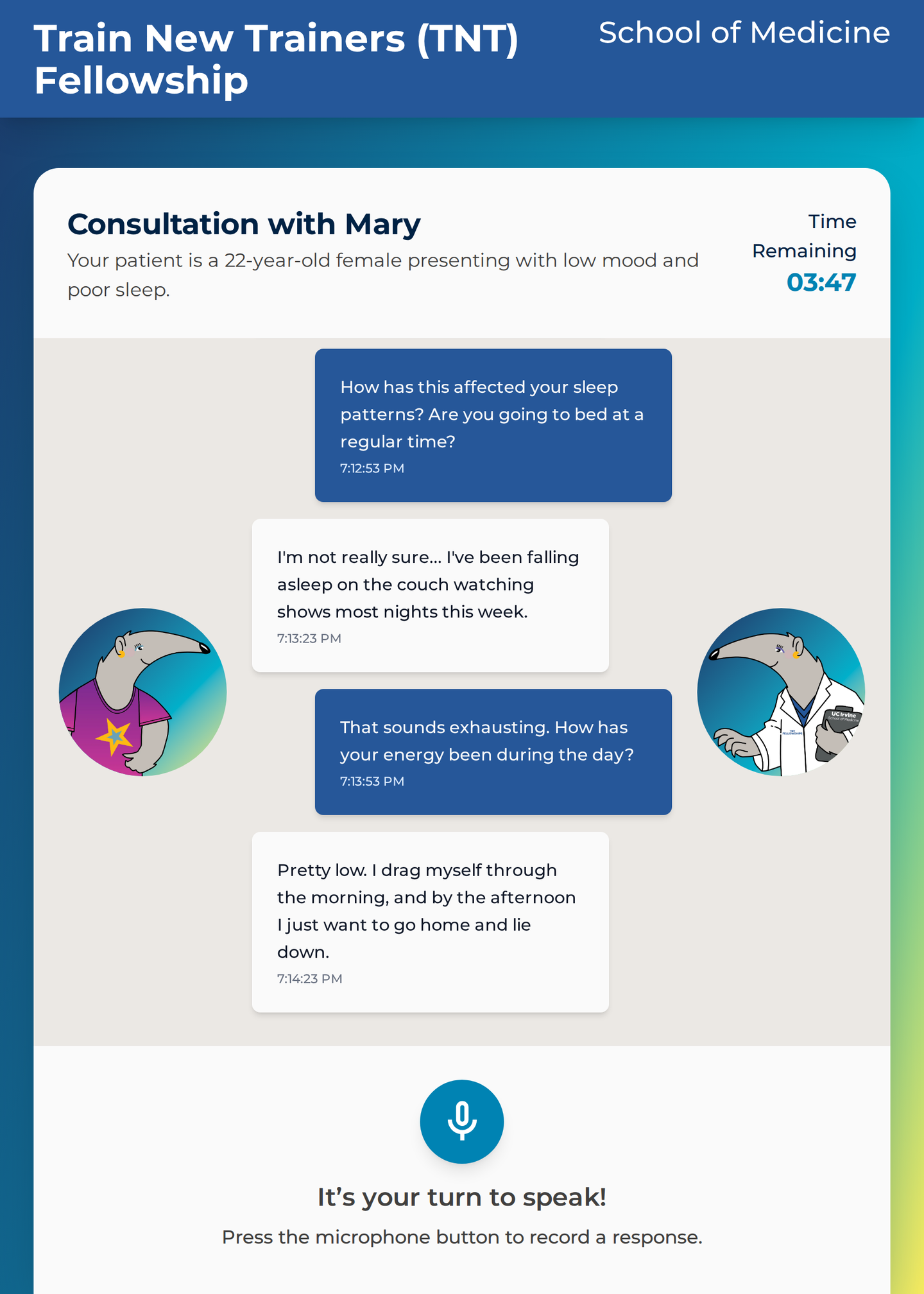
  • WebXd developed a custom application where participants can speak with programmed AI patients while researchers manage study configuration, participant flow, bot settings, consent forms, questionnaires, and data exports from one administrative dashboard.
  • The platform supports both cross-sectional and longitudinal research designs, giving the UCI TNT team greater control over study setup, participant management, AI patient configuration, and research-ready data.
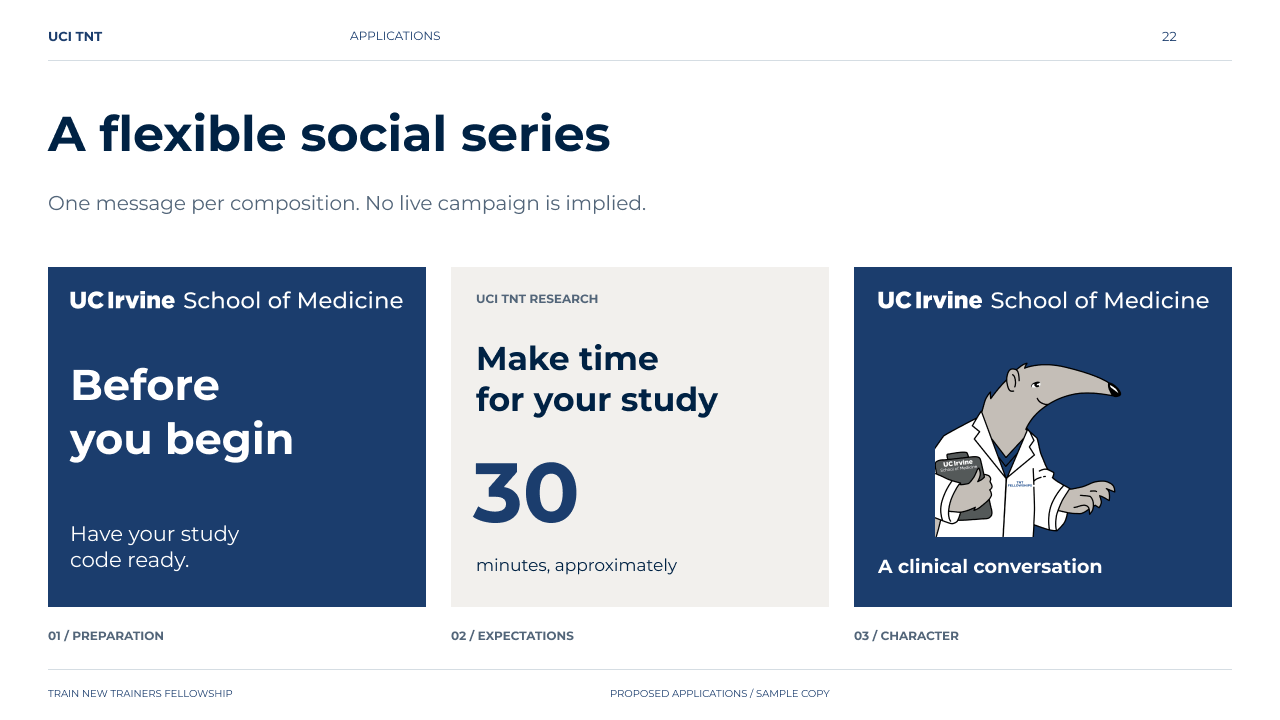
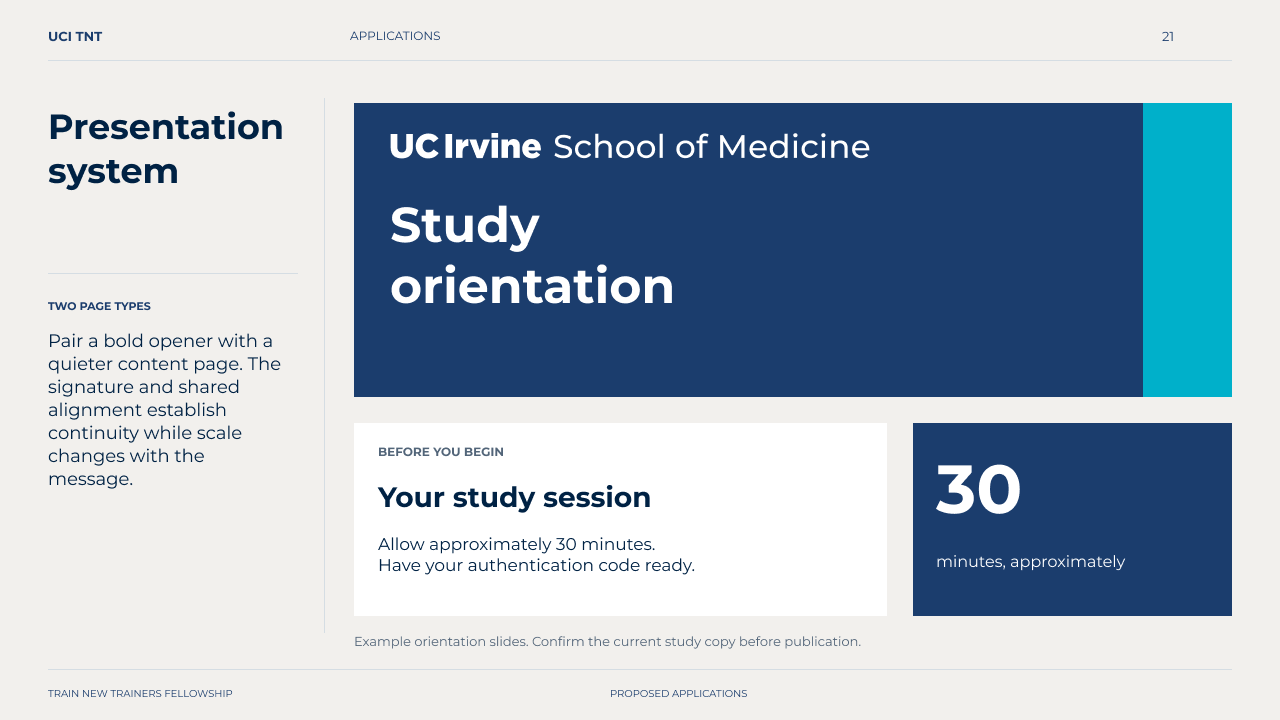
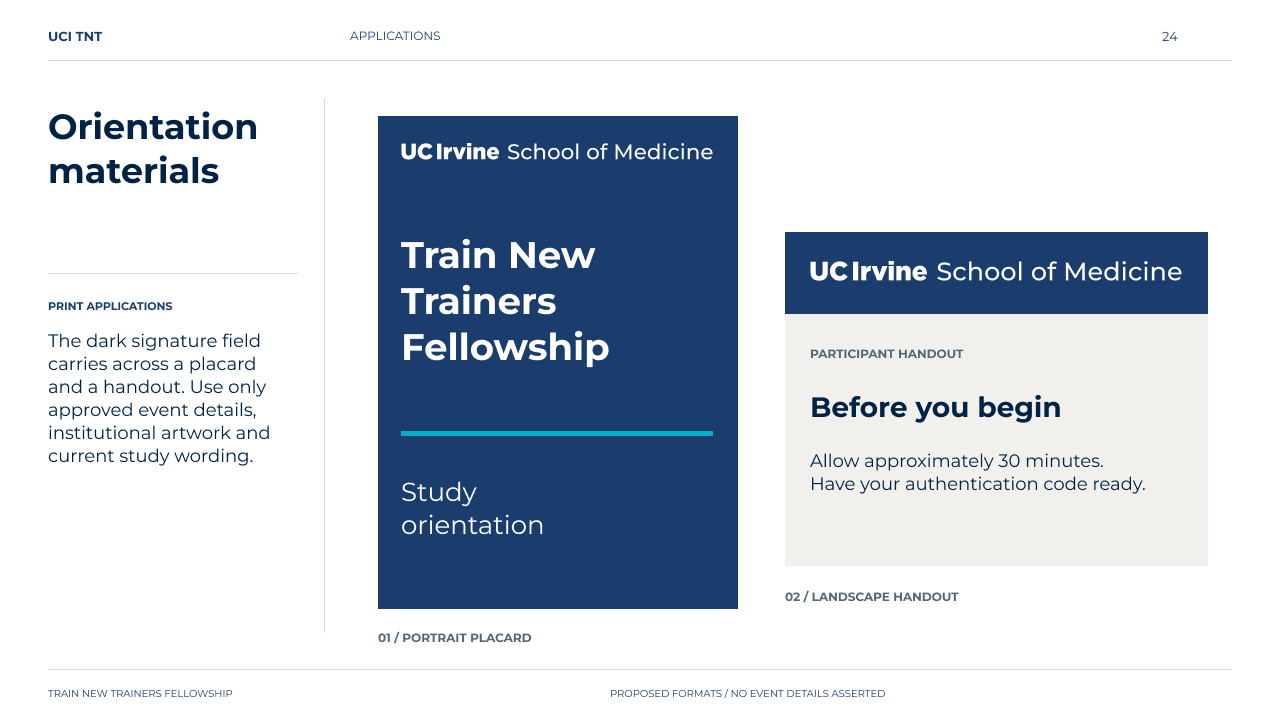
  • UCI TNT gallery image 1
  • UCI TNT gallery image 4
  • UCI TNT gallery image 7
  • UCI TNT gallery image 10
  • UCI TNT gallery image 13
  • UCI TNT gallery image 16
  • UCI TNT gallery image 19
  • UCI TNT gallery image 22
  • UCI TNT gallery image 25
  • UCI TNT gallery image 2
  • UCI TNT gallery image 5
  • UCI TNT gallery image 8
  • UCI TNT gallery image 11
  • UCI TNT gallery image 14
  • UCI TNT gallery image 17
  • UCI TNT gallery image 20
  • UCI TNT gallery image 23
  • UCI TNT gallery image 3
  • UCI TNT gallery image 6
  • UCI TNT gallery image 9
  • UCI TNT gallery image 12
  • UCI TNT gallery image 15
  • UCI TNT gallery image 18
  • UCI TNT gallery image 21
  • UCI TNT gallery image 24

About the UCI School of Medicine TNT Fellowship Program

The UCI School of Medicine TNT Fellowships are clinically practical, evidence-informed certification programs designed to address medical and psychiatric conditions commonly encountered in primary care settings.

Services Performed

  • Custom web application development
  • AI integration
  • Research workflow design
UCI TNT about media image 1
UCI TNT about media image 2
UCI TNT about media image 3
UCI TNT client work 1

The Challenge

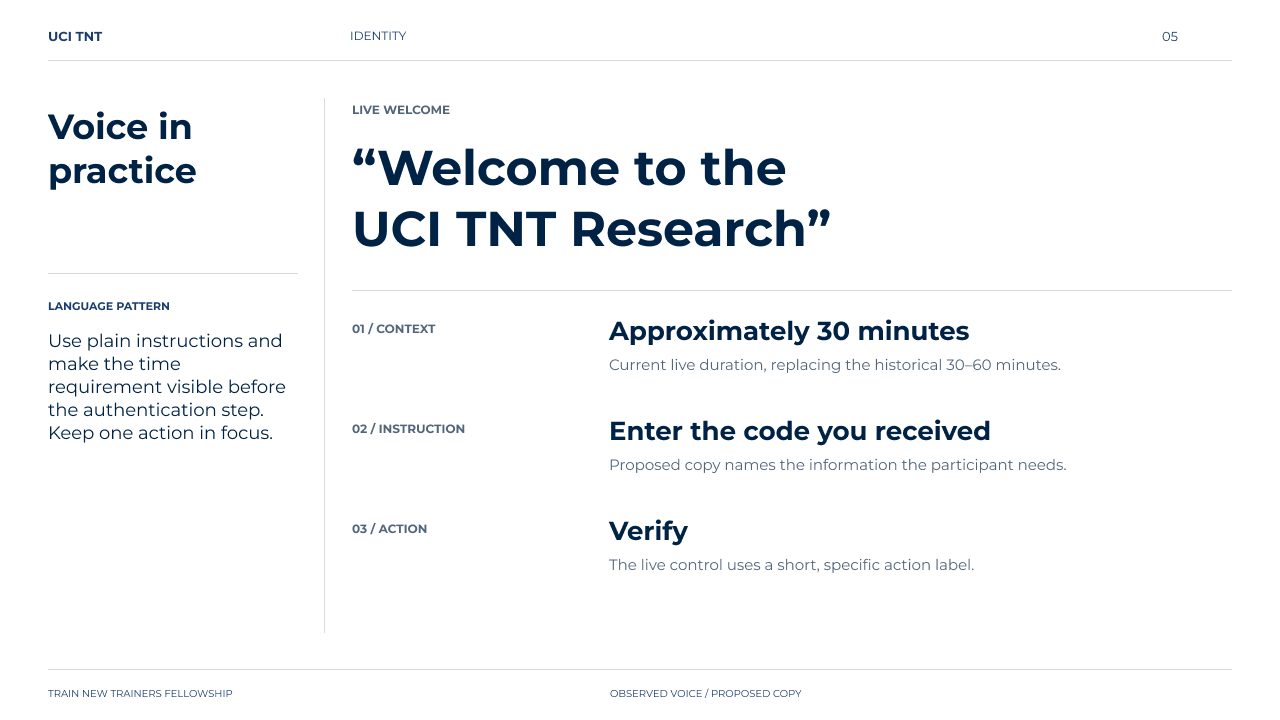
The UCI School of Medicine TNT Fellowship Program needed a secure, configurable web application to support double-blind research studies using AI patient simulations.

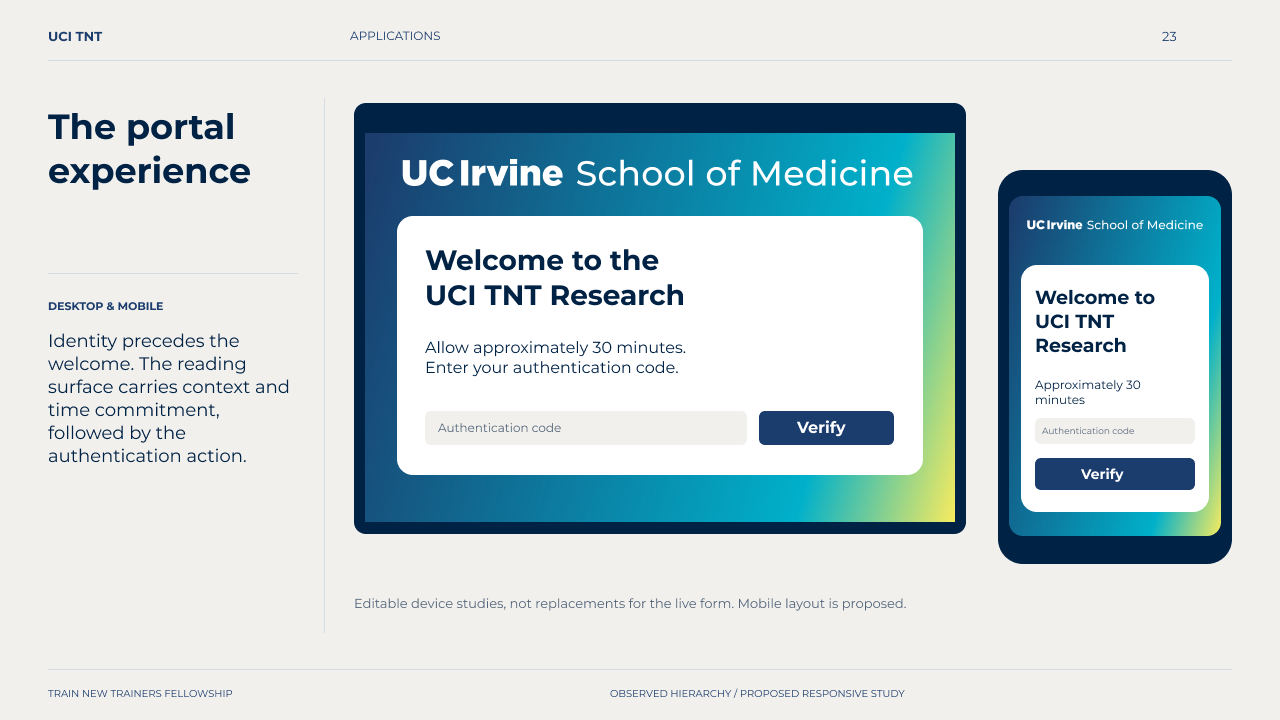
The research team needed to manage study design, participant flow, bot behavior, consent, questionnaires, scheduling, and data exports without relying on developers for every update.

  • Complex study requirements: The platform needed to support both cross-sectional and longitudinal study formats, including session scheduling, bot rotation, multiple bots per session, interaction time limits, and questionnaire placement throughout the participant experience.
  • Researcher control without developer bottlenecks: Administrators needed the ability to create and edit studies, participant groups, consent content, custom forms, and AI patient parameters directly from the dashboard.
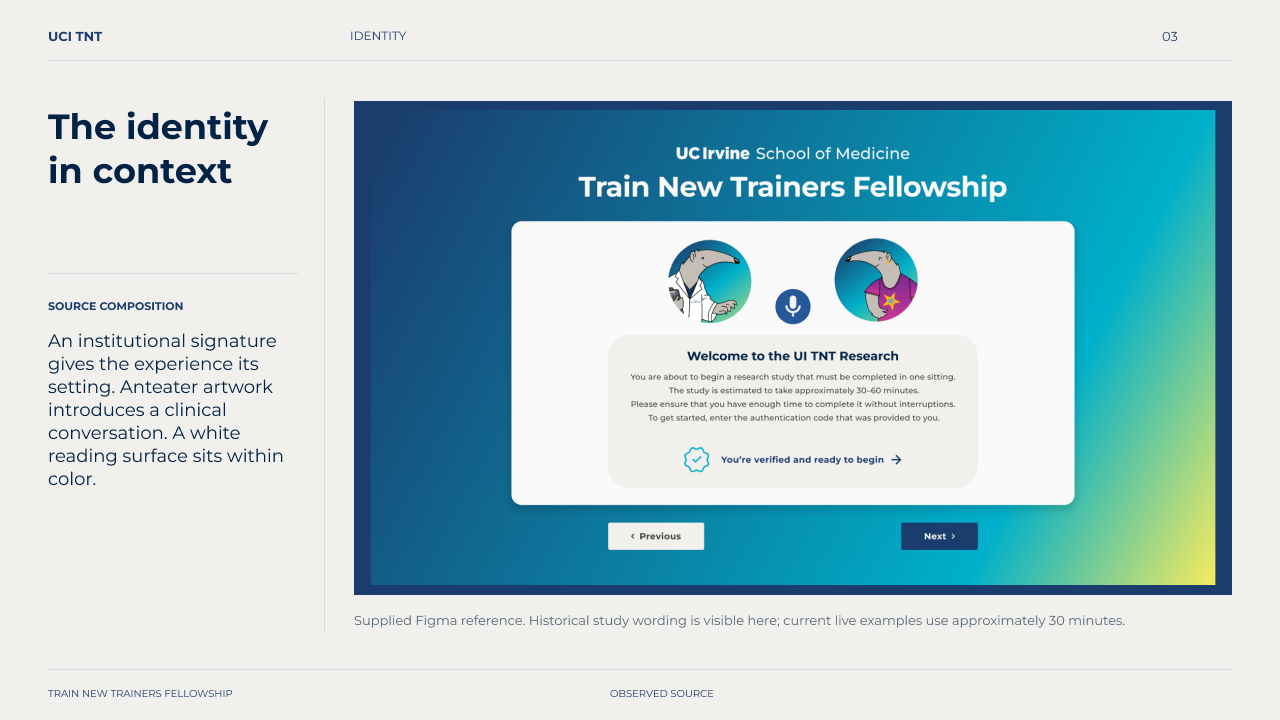
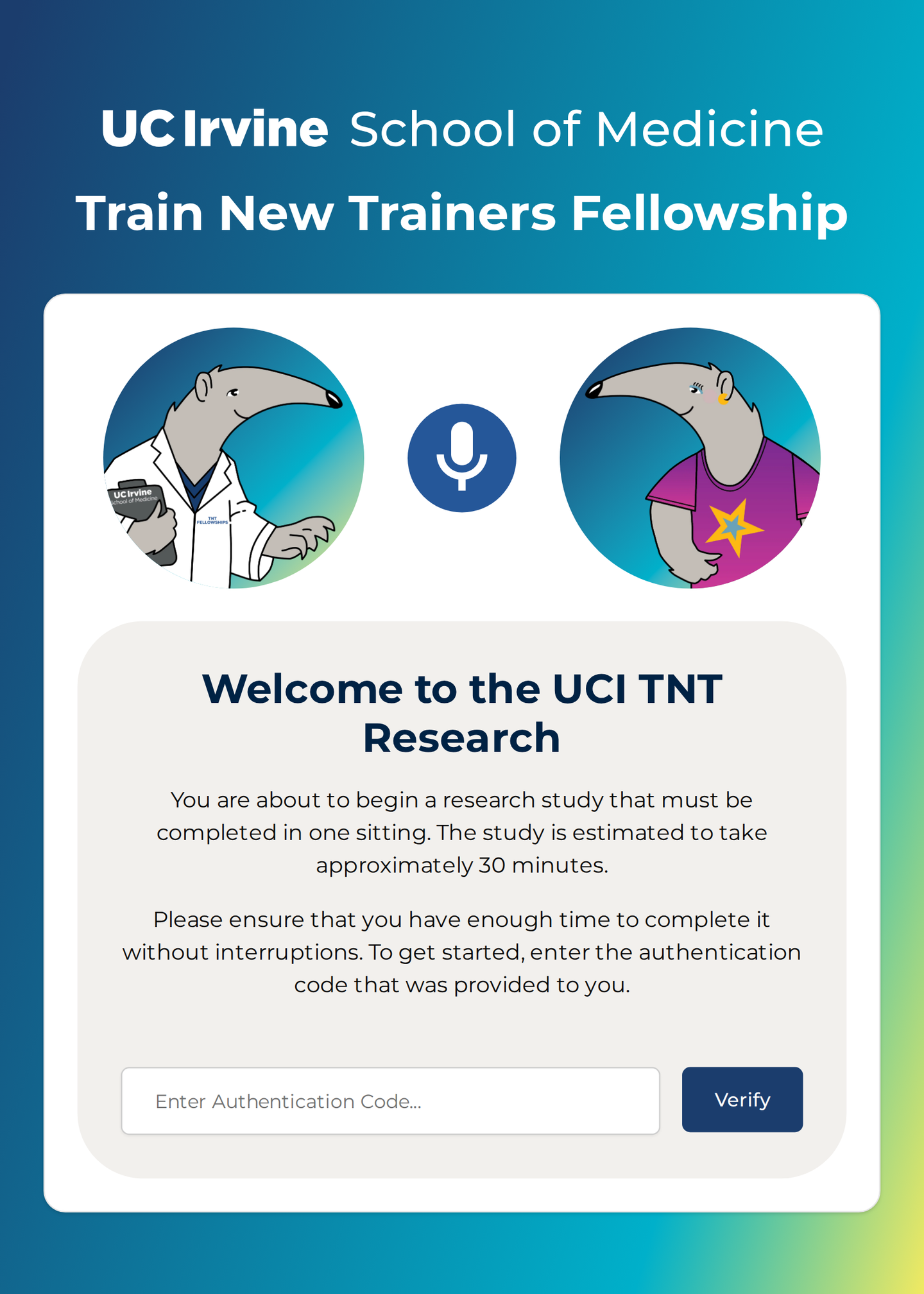
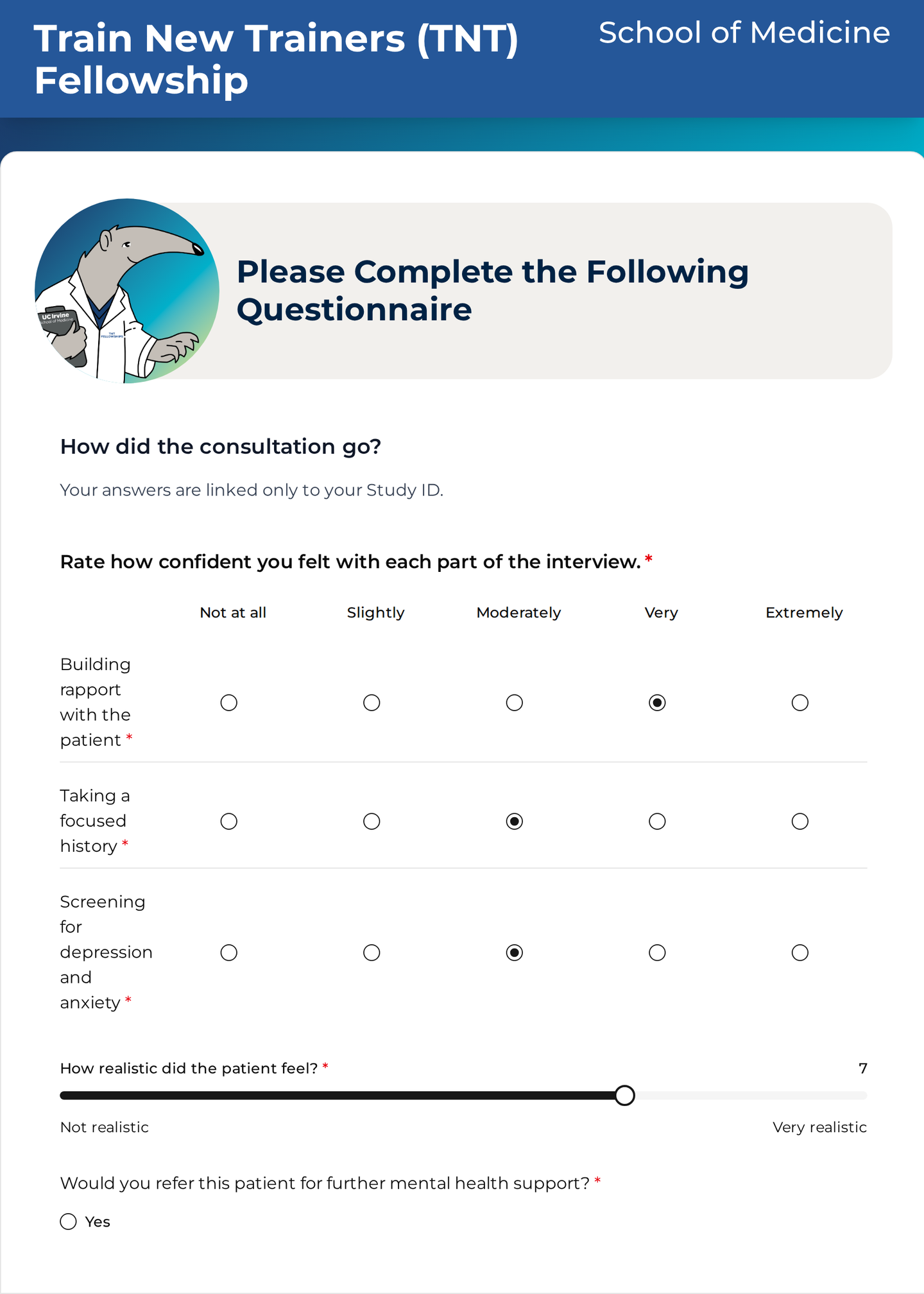
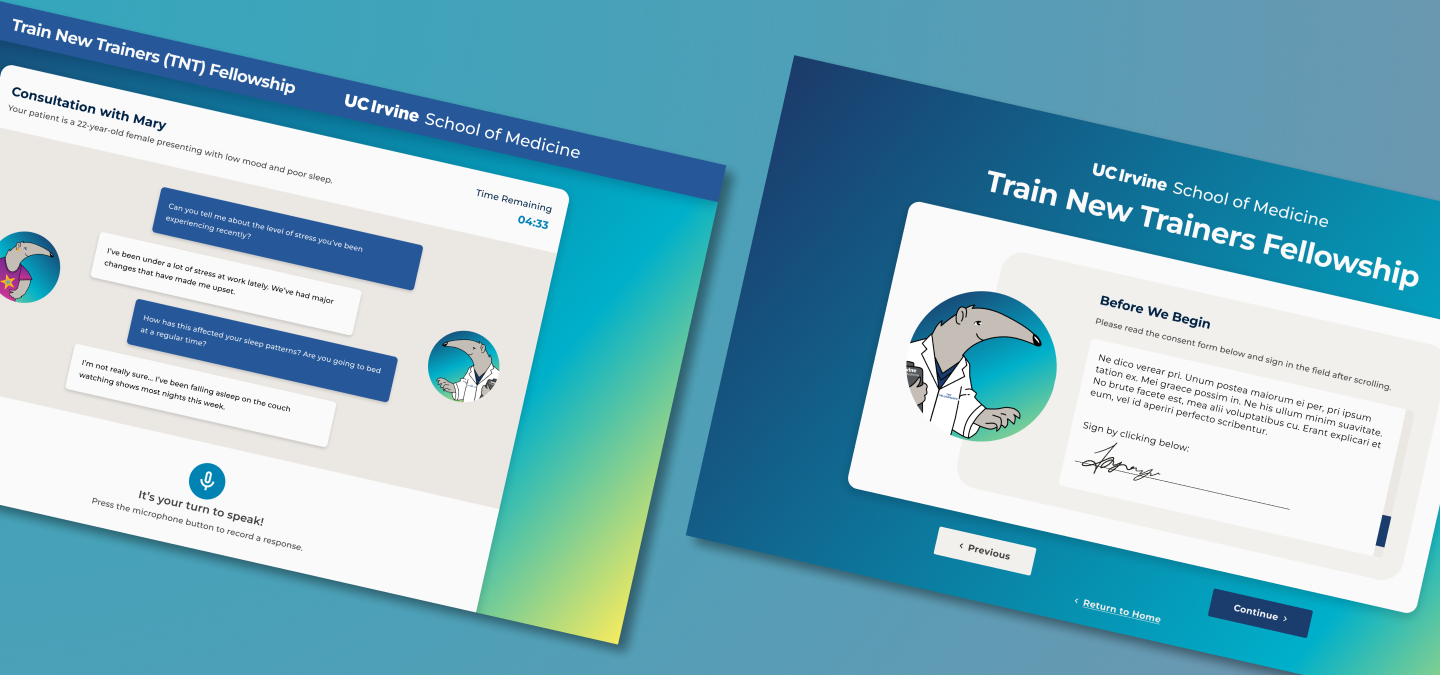
  • Structured participant experience: Participants needed a clear, guided process for consent, questionnaires, and AI patient conversations.
  • Research-ready data capture: Researchers needed clean, organized exports of survey responses and chat transcripts for offline review and analysis.
  • Participant confidentiality: The platform needed to support de-identified participant records while still allowing researchers to manage enrollment and study access.

The Solution

We developed a custom AI patient research application that combines an admin dashboard, participant-facing study experience, configurable AI patient bots, consent and questionnaire tools, and research-ready data exports. The platform was designed so the UCI TNT research team could build, launch, and manage studies independently, with flexible controls for study structure, participant enrollment, bot behavior, consent forms, questionnaires, and session scheduling.

  • Custom Study Management Dashboard: Administrators can create studies, select available AI patient bots, set bots per session, define interaction length, configure session schedules, and manage study status from draft to active to completed.
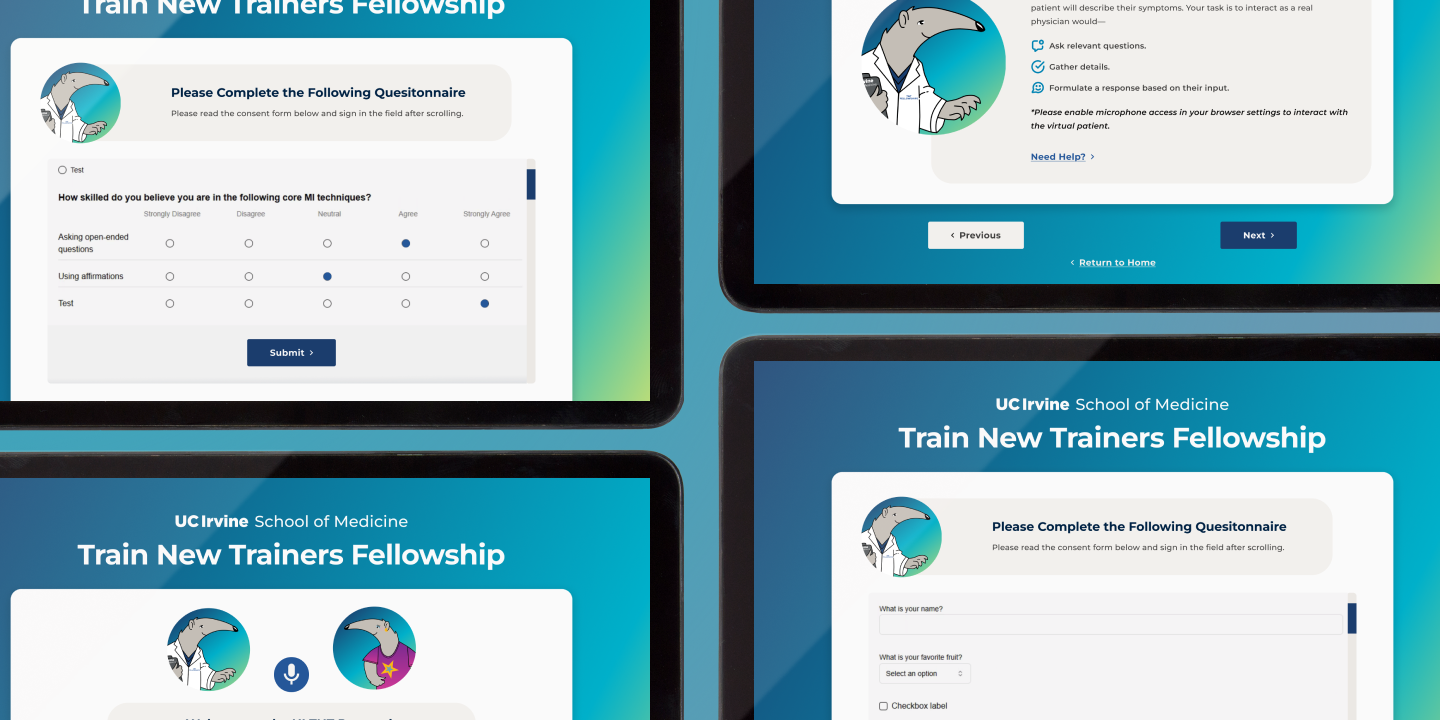
  • Flexible Forms, Consent, and Participant Tools: A custom form builder supports Number, Text, Select, Checkbox, Checkbox List, Radio, and Likert Scale fields, with options for placement, frequency, study assignment, and real-time preview. A WYSIWYG consent form editor allows admins to update consent content directly in the dashboard, while participant management uses de-identified Study IDs and access codes to help protect confidentiality.
  • AI Patient Interaction Pipeline and Research Data Export: We built a custom AI pipeline using large language models, text-to-speech, and speech-to-text models to support natural conversations between participants and AI patients. Researchers can export a ZIP archive containing aggregated CSV data and individual timestamped transcripts for each participant interaction.
UCI TNT client work 2

The Results

The completed platform gives the UCI TNT research team a configurable system for managing double-blind AI patient studies from setup through data export.

  • Greater research team autonomy: Administrators can create and update studies, forms, consent content, participant records, session settings, and AI patient parameters without relying on developers for routine changes.
  • Flexible double-blind study workflows: The platform supports one-time and recurring sessions, bot rotation, configurable bots per session, questionnaires between bots or after sessions, and both cross-sectional and longitudinal study formats.
  • A more guided participant experience: Participants move through a structured flow that includes study access, consent, questionnaires, AI patient interactions, and session completion. This helps create a more consistent experience across participants and study sessions.
  • Research-ready data collection: Structured exports give researchers access to session data, participant records, form responses, and individual chat transcripts in formats designed for offline analysis.
  • A scalable foundation for future studies: Because study structure, forms, bots, scheduling, and participant flow are configurable, the platform can support new research protocols without requiring a completely new application each time.

Autonomy

researchers manage studies without routine developer support

Workflows

cross-sectional and longitudinal study configuration

Guidance

structured consent, questionnaires and AI patient sessions

Data exports

research-ready records and interaction transcripts

What This Means for Your Organization

If your team relies on off-the-shelf tools that almost fit, or on developers for every small change, custom AI application development can close that gap. A platform built around your exact workflow gives your team control, removes bottlenecks, and produces cleaner data. Whether you run research studies, training programs, or complex internal processes, the right custom application lets your people do their work without waiting on ours.

FAQs

In a double-blind study, neither the participants nor the people running the sessions know certain details, such as which group a participant is in. A double-blind research platform enforces those conditions in software, controlling participant flow, bot assignment, and data handling so the study stays unbiased. We built the UCI TNT platform to support these workflows directly.

Yes, that was a core goal. Administrators can create and edit studies, forms, consent content, participant records, and AI bot settings from the dashboard. The platform is designed so routine study changes do not require developer support.

The platform uses de-identified Study IDs and access codes instead of personal details, which helps protect participant confidentiality during a study. The right approach depends on your specific study requirements, and we scope confidentiality and data handling with your team for each project.

We build custom web applications that integrate large language models, voice (text-to-speech and speech-to-text), configurable admin tools, and structured data exports. For UCI, that meant an AI patient research platform, but the same building blocks apply to training tools, internal platforms, and other AI-driven applications.